
40HQ containers are one of the common means of transporting goods in international trade, which are characterized by their high space compared to general containers. However, for many people who first contact with cross-border logistics, the volume of high-cabinet containers may not be sufficiently understood.
So, how many cubic meters of high-cabinet containers in the end? This article will address this question from several aspects.
Table of Contents
ToggleUnderstanding 40HQ Containers size
The standard high cube container dimensions are 20 feet long (609.6CM), 8 feet wide (243.84CM) and 8.5 feet high (259.08CM), which equates to a volume of about 33.2 cubic meters.
The 440HQ container (1219.2CM), on the other hand, has a volume of approximately 66.4 cubic meters. As a result, high-bay containers have more space for storing cargo than regular containers.
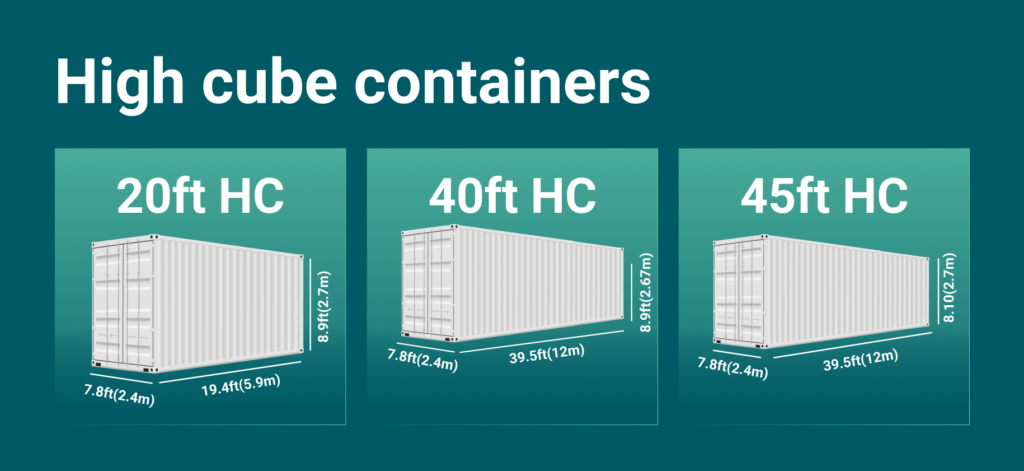
Understanding 40HQ containers volume
The volume of a 40HQ containers can be utilized appropriately according to the characteristics and dimensions of the cargo. When loading cargo, you need to consider the shape, weight and stacking method of the cargo to ensure the maximum use of container space.
It should be noted that although the high-cabinet container volume is large, but should not be unlimited overloading of goods. According to international transport regulations, the maximum net weight of the high-cabinet container is 24 tons.
The volume of a high-bay container varies according to different sizes, with the standard 20-foot and 40-foot high-bay containers having a volume of about 33.2 cubic meters and 66.4 cubic meters respectively.
When using high bay containers, space should be reasonably utilized and transportation regulations should be observed to ensure the safety of the goods and the efficiency of transportation.
40HQ containers related post:
Cost Of Shipping 40ft Containers From China To USA
Process of 40HQ containers FCL ocean freight export
- The seller signs the transportation contract with the freight forwarder or shipping company, submits the details of the goods, sea route, cost and so on.
- The seller sends the goods to the designated warehouse or factory for loading.
- The freight forwarder or shipping company is responsible for arranging the container, trailer and customs declaration and other formalities.
- Containers are loaded from the port of origin and start sea transportation.
- After arriving at the port of destination, the freight forwarder or shipping company is responsible for customs clearance, picking up the container, sending the whole container to the designated place (if the U.S. FBA warehouse).
- FBA warehouse signing acceptance, the seller to complete the payment of goods (the first cooperation will be paid at the port).
Advantages of 40HQ containers FCL sea freight
- Cost advantage: the whole container sea transport to avoid the split and assembling link in the LCL transportation, reducing the cost of logistics such as dismantling the container, playing the trust.
- Advantage of time efficiency: FCL reduces the intermediate links, improves the transportation efficiency and shortens the operation time of goods in transit.
- Cargo safety: whole container transportation reduces the number of handling of goods in the transportation process and reduces the risk of bumping and damaging the goods.
40HQ Container FCL sea Freight Export Precautions
- Sellers need to ensure that the number, volume and weight of goods can fill one or more containers to make full use of container space and reduce costs. If there is excess cargo less than a full container, it is recommended to combine the container with other sellers to export, which can reduce the cost.
- Sellers need to know in advance the destination country’s import policy, tariff rates, customs clearance requirements and other information to ensure the smooth clearance of goods.
- Choose a strong and reputable freight forwarder or shipping company to ensure the quality of service and safety of goods during transportation.
- Sellers need to pay attention to the shipping market dynamics in the week of shipment, to understand the fluctuation of freight prices, changes in shipping schedules and other conditions, in order to adjust the transportation plan in a timely manner.
We provide professional international freight forwarding service from China to USA.If you have transportation challenges, we have a solution!
Smart Freight Calculator
Using 40HQ Containers When Shipping from China to the USA
When planning large-volume shipments, many importers choose 40HQ containers when shipping from China to the USA. A 40HQ (40-foot High Cube) container provides approximately one extra foot of internal height compared with a standard 40GP container. This additional height allows businesses to load more cargo, especially lightweight or bulky goods such as furniture, packaging materials, consumer products, and e-commerce inventory.
Using a 40HQ container can significantly improve shipping efficiency. By maximizing container space, importers can reduce the cost per unit and optimize freight expenses for long-distance routes between China and the United States. It is particularly common for full container load (FCL) shipments where businesses export large quantities of products from manufacturing hubs such as Shenzhen, Ningbo, or Shanghai to major U.S. ports like Los Angeles, Long Beach, and New York.
However, container selection is only one part of international logistics planning. Importers must also consider freight methods, shipping costs, customs clearance, and transit times.
For a complete overview of freight options, costs, and shipping timelines, read our complete guide to shipping from China to the USA:
What is a 40HQ container in international shipping?
A 40HQ container (40-foot High Cube container) is a standard shipping container that is about one foot taller than a regular 40GP container. It provides approximately 76 cubic meters of cargo space, allowing businesses to load more goods. This type of container is widely used for large shipments and is especially common when shipping from China to the USA for products such as furniture, consumer goods, and e-commerce inventory.
Is a 40HQ container suitable for shipping from China to the USA?
Yes, 40HQ containers are one of the most commonly used container types for shipping from China to the USA. Because they offer additional cargo height and volume, they allow importers to maximize loading capacity and reduce shipping costs per unit. Many exporters choose 40HQ containers for full container load (FCL) shipments between major Chinese ports and U.S. ports.
What products are typically shipped in 40HQ containers?
40HQ containers are commonly used for lightweight but bulky cargo. Typical products include furniture, home appliances, packaging materials, textiles, toys, and e-commerce goods. These products benefit from the additional vertical space available in a high cube container when shipping from China to the USA.
How much cargo can a 40HQ container hold?
A 40HQ container typically has a capacity of about 76 cubic meters and a maximum payload of around 26–28 metric tons, depending on the shipping line and regulations. This large capacity makes it ideal for full container load shipments when transporting goods internationally, especially for long-distance routes such as shipping from China to the USA.
How long does shipping from China to the USA take using a 40HQ container?
Transit time depends on the departure and destination ports as well as the shipping route. In most cases, sea freight shipping from China to the USA using a 40HQ container takes between 15 and 35 days. West Coast ports such as Los Angeles or Long Beach are usually faster, while East Coast destinations may require additional transit time.
Related video:
Shipping from China to the USA
When planning your logistics, utilizing a 40HQ container can significantly improve efficiency. These high-cube containers offer extra vertical space, allowing you to load more goods. This added volume directly impacts your strategy when shipping from China to the USA.
By maximizing cargo space with bulky items like furniture, you lower your shipping cost calculation per unit. Smart freight planning ensures you get the most out of every full container load. Additionally, using a single larger container simplifies your operations. Full container load shipments often experience more reliable transit times and straightforward customs clearance at destination ports.
Whether you manage large e-commerce inventory or handle routine freight from China to USA, choosing the proper container size is a vital step. Effective space utilization prevents unexpected delays and reduces overall expenses when shipping from China to USA.
For a deeper look into routing, costs, and planning, read our Complete guide to shipping from China to the USA.
Frequently Asked Questions About Shipping from China to the USA
Why should I choose a 40HQ container when shipping from China to the USA?
A 40HQ container gives you an extra foot of vertical space compared to a standard 40-foot container. This extra room lets you pack more bulky or lightweight goods, like furniture or clothing. By fitting more items into a single container, you lower your shipping cost per unit. This makes it a highly efficient choice for large inventory loads moving across the Pacific.
Does using a 40HQ container affect customs clearance and transit times to the United States?
Using a full 40HQ container generally streamlines your shipping process. Full container loads often clear US customs faster than combined smaller shipments, as you do not have to wait for other companies to unpack their goods. Sea freight transit times typically range from 15 to 35 days, depending on whether you route your cargo to a West Coast or East Coast port.
Can I fill a 40HQ container to the top with heavy products?
While 40HQ containers offer massive volume, you must still follow strict weight limits for international ocean freight. The maximum net weight is usually around 24 tons. If you import heavy items like machinery or dense metals from China to the USA, you might reach the weight limit long before you fill the physical space. Always balance your cargo weight and volume during freight planning.
Shipping from China to the USA
Choosing between a 40 General Purpose (GP) and a 40 High Cubic (HQ) container is a crucial step in freight planning. Since 40HQ containers offer about 10 extra cubic meters of space for roughly the same price as a 40GP, they are highly efficient for light, bulky cargo.
This container choice directly impacts your shipping cost calculation when shipping from China to USA. Maximizing the volume in a 40HQ lowers your overall cost per unit. Conversely, if you transport heavy materials, a 40GP prevents you from exceeding weight limits before filling the physical space.
Proper container selection also streamlines logistics for freight from China to USA. Well-planned loads help avoid overweight container penalties, which can significantly delay transit time and complicate customs clearance at American ports. Understanding your cargo’s specific weight-to-volume ratio ensures smooth shipping from China to the USA.
For deeper insights into routing, timelines, and costs, read our Complete guide to shipping from China to the USA.
Frequently Asked Questions About Shipping from China to the USA
Is it more expensive to ship a 40HQ container instead of a 40GP?
You might assume a larger container costs much more, but ocean freight rates for 40GP and 40HQ containers are usually identical when shipping from China to the United States. Sometimes you will see a minor difference of $50 to $100. Because port fees and handling charges remain the same, choosing a 40HQ for bulky goods gives you more space without significantly increasing your shipping expenses.
How do I decide between a 40GP and a 40HQ for my US imports?
Your cargo weight dictates the best container choice. If you import heavy items like ceramic tiles or machinery, a 40GP is ideal since you will reach the 26-ton weight limit long before filling the space. For lighter products like furniture or apparel, we recommend a 40HQ. The extra vertical space lets you pack more units per shipment, maximizing your freight efficiency across the Pacific.
What happens if the Chinese port runs out of 40GP containers?
Occasionally, shipping lines experience equipment shortages at origin ports. If you book a standard 40GP container and none are available, the carrier might upgrade you to a 40HQ at no extra cost. This standard industry practice ensures your cargo departs on schedule. You receive the benefit of a larger container while paying the original rate, preventing costly delays in your American supply chain.
